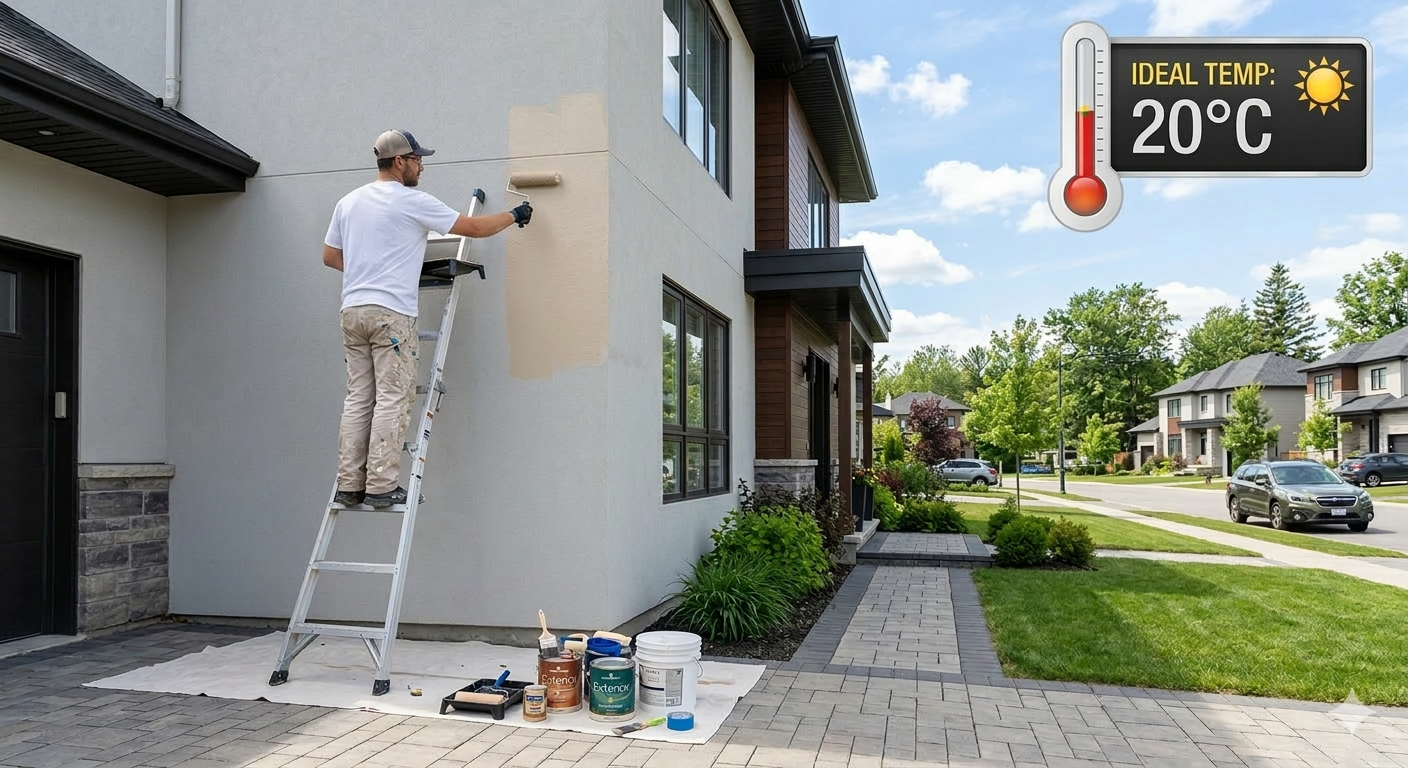
Getting the temperature right is one of the most overlooked factors in successful exterior painting. Paint applied in conditions that are too hot, too cold, or overly humid often peels, cracks, bubbles, or fails to adhere properly. In our 15+ years of painting Sydney homes, we’ve seen countless otherwise-perfect paint jobs ruined simply because the timing or weather wasn’t ideal. This guide will cover the ideal temperature range for exterior painting, the best seasons and times of day, humidity considerations, paint types, and practical planning tips to ensure your project succeeds. By the end, you’ll know exactly how to pick the perfect window to paint your home safely and effectively.
The Ideal Temperature Range
The Perfect Conditions for Exterior Paint
For a long-lasting, flawless exterior finish, temperature matters as much as technique. The general ideal air temperature for painting your home’s exterior is between 50°F and 85°F (10°C to 29°C). The sweet spot sits around 60–75°F (15–24°C), offering even drying and optimal adhesion.
For latex paint, stick to 50–85°F (10–29°C), with 50°F (10°C) being the minimum for reliable results. Some specialty latex paints can handle cooler conditions down to 35°F (2°C), but standard formulas may struggle. Oil-based paints are more forgiving, performing well between 40–90°F (4–32°C) and tolerating slightly cooler surfaces.
Other factors matter too: aim for moderate humidity around 40–70%, ensure no rain for at least 24–48 hours, and avoid strong winds that can blow dust onto wet paint. Surface temperature can differ from the air. Direct sunlight can heat walls 10–20 degrees above ambient, affecting drying and finish.
Professional tip: “The temperature of the surface you’re painting matters just as much as the air. Plan your timing accordingly for the smoothest, longest-lasting results.”
Why Temperature Matters
Understanding the Science Behind Temperature
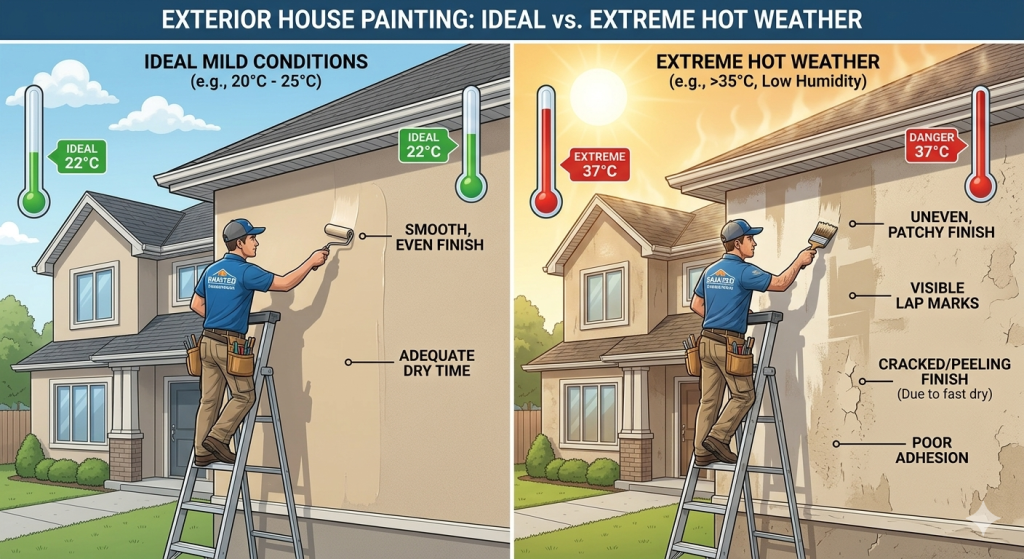
Temperature directly affects how paint dries, adheres, and lasts. When it’s too cold, paint dries slowly or incompletely, leading to poor adhesion. Over time, this can cause cracking, peeling, and a dull or chalky finish, and moisture may become trapped underneath, further compromising the surface.
When it’s too hot, above 85°F (29°C), paint dries too quickly. This can leave brush marks, streaks, uneven colour, bubbles, or blisters. The coating may not cure properly, causing peeling and reducing durability.
Humidity also plays a key role. Too little humidity makes paint dry too fast, resulting in a rough finish. Too much humidity slows drying and can encourage mildew. The optimal range is 40–70%.
Professional perspective: “Temperature control is why spring and autumn are prime painting seasons in Sydney. Stable, moderate conditions make a huge difference in adhesion, appearance, and long-term results.”
Seasonal Considerations for Sydney
Choosing the Right Season in Sydney’s Climate
Choosing the right season is key to a successful exterior paint job in Sydney. Spring (September–November) offers mild temperatures averaging 15–20°C, moderate humidity, and generally stable weather. Rain is possible, but airflow and daylight make it an excellent time for exterior work.
Summer (December–February) brings hot days (25–35°C+), higher UV exposure, and often lower humidity. Paint dries very quickly, so the ideal painting window is early morning or late afternoon. Avoid the intense midday sun, as it can cause streaks, bubbles, or uneven coverage.
Autumn (March–May) is another excellent season. Temperatures are mild (15–22°C), humidity is balanced, and the weather tends to be stable. Lighting conditions and airflow are often ideal for even drying and professional finishes.
Winter (June–August) can be challenging. Cool temperatures (10–15°C), lower humidity, and increased rainfall slow drying times. Nighttime lows should be checked before painting.
Professional advice: “Spring and autumn are our preferred seasons in Sydney. Stable temperatures and humidity consistently produce beautiful results, while we avoid mid-summer heat whenever possible.”
Best Time of Day to Paint
Timing Your Project for Success
The ideal window for exterior painting is mid-morning to mid-afternoon (10 am–3 pm). By this time, morning dew has usually evaporated, and temperatures have climbed into the optimal range. This timing also allows the paint enough hours to dry before nightfall.
Avoid starting too early when surfaces are still damp or too late when cooler evening temperatures slow drying. Intense midday sun can cause paint to dry too quickly, leaving brush marks, streaks, or uneven coverage.
On very hot days, start earlier and work efficiently. On cooler days, wait until temperatures peak.
Professional tip: “We typically start painting around 10 am in Sydney. It warms the surface just enough while giving paint plenty of time to dry properly before nightfall.”
Impact of Paint Type on Temperature
Different Paints, Different Requirements
Different paints have varying temperature requirements, so it’s important to check labels before starting. Latex paints perform best between 50–85°F (10–29°C) with a minimum of 50°F (10°C), though some specialty formulas can work down to 35°F (2°C). Oil-based paints are more forgiving, handling a wider range of 40–90°F (4–32°C). Acrylic latex is the most common choice for exteriors in Sydney.
Premium exterior paints usually tolerate temperature fluctuations better than budget options, offering more consistent results.
Professional note: “We always choose quality exterior paints formulated for Australian conditions. They perform reliably across different temperatures and humidity, giving a long-lasting finish.”
Checking paint type ensures your project succeeds, whatever the weather.
How to Plan Your Project
Smart Planning for Smooth Exterior Painting
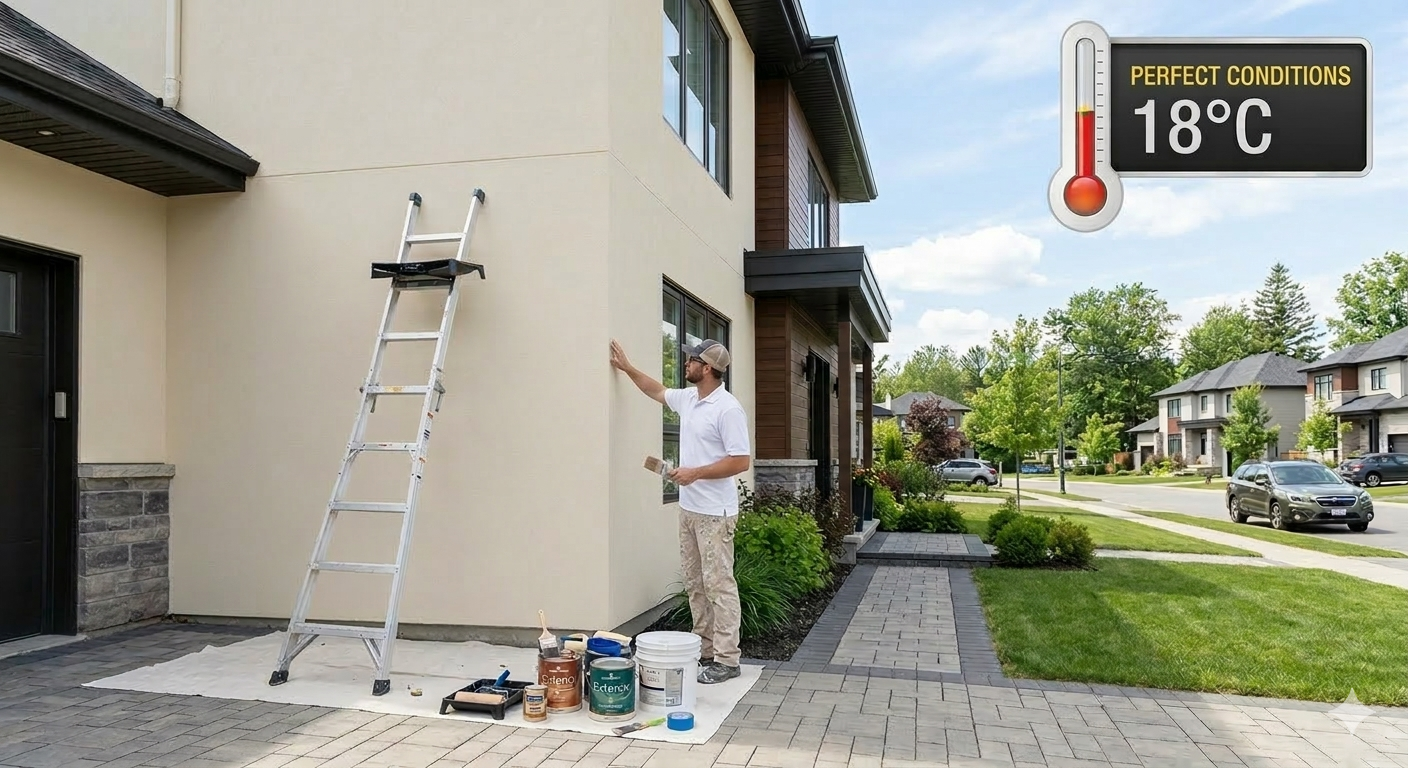
Proper planning is key to a successful exterior paint job. Check the weather forecast 5–7 days ahead, paying attention to temperature ranges, humidity, wind, and rain. Make sure there’s no rain predicted for at least 24–48 hours after painting. Avoid painting during heat waves, which can cause paint to dry too quickly, or cold fronts, which slow drying or risk freezing.
Consider nighttime lows too: surfaces shouldn’t drop below 50°F (10°C) if possible. Flexible timing is essential; it’s better to delay your project than risk poor results.
Professional approach: Contractors always schedule around weather conditions. Planning carefully ensures even drying, proper adhesion, and a long-lasting, professional finish.
Frequently Asked Questions
Q1: Can I paint in temperatures below 50°F?
A: Not recommended for standard paints. Some specialty paints work down to 35°F, but 50°F+ is safer for consistent results.
Q2: What about painting in Sydney’s summer heat?
A: It’s possible, but stick to early mornings or late afternoons. Avoid midday heat above 85°F, as paint can dry too fast and fail to adhere.
Q3: How do I know if nighttime temperatures are an issue?
A: Check the forecast. If lows fall below 50°F within 48 hours of painting, delay the project.
Q4: Can humidity be controlled?
A: Not directly. Choose days with moderate humidity (40–70%) and avoid painting after rain.
Q5: Does surface temperature differ from air temperature?
A: Yes. Sun-warmed surfaces can be much hotter than the air, which affects paint performance.
Conclusion – Plan for Success
Getting the temperature right is crucial for a successful exterior paint job. Aim for 50–85°F (10–29°C) with moderate humidity, and plan around Sydney’s spring and autumn months for the most consistent results. Don’t rush; consider daytime highs, nighttime lows, and recent or forecasted weather. Proper timing ensures paint adheres well, dries evenly, and lasts longer. Professional painters always factor in these conditions to avoid peeling, bubbling, or uneven finishes. With careful planning and attention to temperature, your painting project can achieve a flawless, durable result. The perfect painting window is achievable with preparation and patience.